
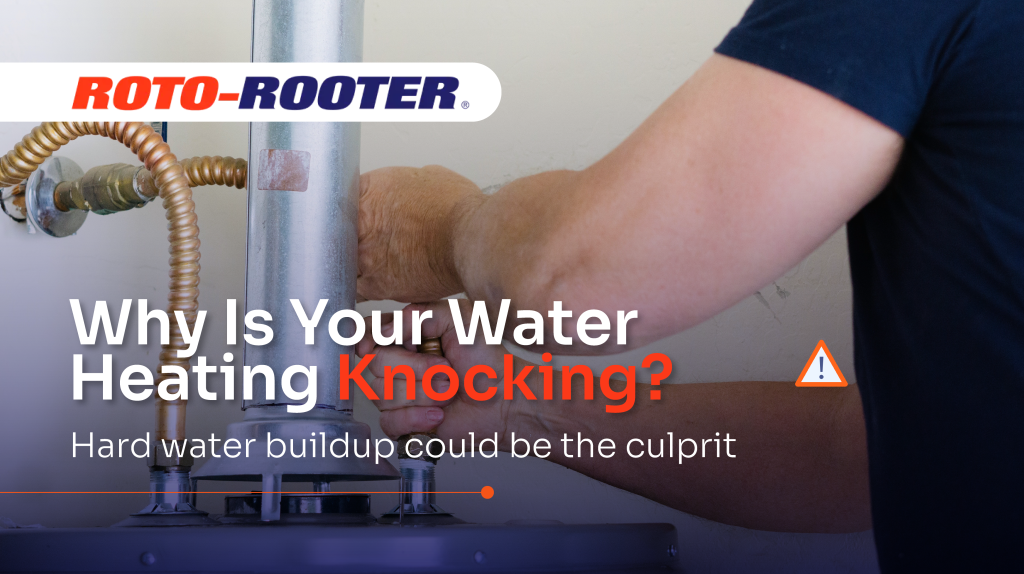
How Hard Water Sediment Stresses Your Hot Water Tank and Why Proactive Maintenance Saves Your Plumbing
If your water heater sounds like someone is trapped inside knocking on the tank walls, you shouldn’t ignore it. At Roto-Rooter, we help local property owners deal with the unique challenges of our regional hard water every single day.
We understand that while a noisy water heater isn’t guaranteed to explode immediately, those strange popping, rumbling, or knocking sounds are clear warning signs that your system is under severe stress, losing its energy efficiency, and rapidly heading toward a costly breakdown.
The Reality of Hard Water in the High Desert
Many homeowners don’t realize exactly why our local geographic area causes water heaters to degrade faster than in other regions:
- Mineral-Rich Groundwater: The water supply in towns like Victorville, Hesperia, Apple Valley, and Barstow relies heavily on desert aquifers. As this groundwater travels through underground rock formations, it dissolves and carries high concentrations of dissolved minerals.
- The Calcium and Magnesium Problem: These dissolved minerals primarily consist of calcium carbonate and magnesium. While completely safe to drink, they react aggressively to temperature changes.
- Thermal Precipitation: When water is pumped into your home's water heater and raised to temperatures between 120°F and 140°F, these minerals rapidly crystallize and drop out of the liquid suspension.
Why Sediment Causes a Popping or Knocking Sound
The actual physics behind that irritating sound in your garage or closet boils down to a phenomenon called “thermal trapping”:
- The Insulating Layer: Over months of continuous use, millions of tiny mineral crystals settle onto the floor of the tank, calcifying into a thick, rock-like crust directly over your unit's internal heat source.
- Trapped Water Pockets: As fresh, cold water enters the tank, tiny drops slip past the cracks in the mineral crust and get trapped beneath this thick layer of debris.
- Steam Explosions: As the gas burner fires up or the electric elements cycle on, the water trapped beneath the sediment quickly reaches its boiling point. It flashes into steam, creating high-pressure vapor bubbles.
- The Echoing Sound: As these bubbles expand violently, fight their way past the heavy mineral crust, and burst back into the cooler water above, they create the distinct knocking, thumping, or popping noise echoing through your pipes.
The Hidden Costs of Neglecting a Noisy Water Heater
Ignoring a knocking sound isn’t just an auditory annoyance; it actively drains your wallet and shortens your equipment’s lifespan:
- Skyrocketing Energy Expenditures: Because the calcified sediment acts as a literal heat barrier, your unit has to work twice as hard to transfer heat into the water. This forces your burner to stay on much longer, causing a noticeable spike in your monthly utility bills.
- Severe Tank Stress and Metal Fatigue: Steel expands when heated and contracts when cooled. When sediment traps heat, the bottom of your water heater reaches extreme temperatures, causing the metal tank to undergo severe physical distortion and structural fatigue.
- Internal Lining Failure: Standard traditional water heaters feature an internal glass-fused lining designed to keep water from directly touching the steel tank. The intense, uneven heat generated by trapped sediment causes this glass lining to crack and flake away.
- Sudden Corrosion and Flooding: Once the protective lining is compromised, water comes into direct contact with the bare steel. It is only a matter of time before rust eats through the metal completely, resulting in a sudden, destructive tank rupture that can flood your home.
How Roto-Rooter Restores Your Hot Water System
Proactive care is always cheaper than a midnight plumbing disaster. At Roto-Rooter, we provide tailored solutions depending on the age and condition of your system:
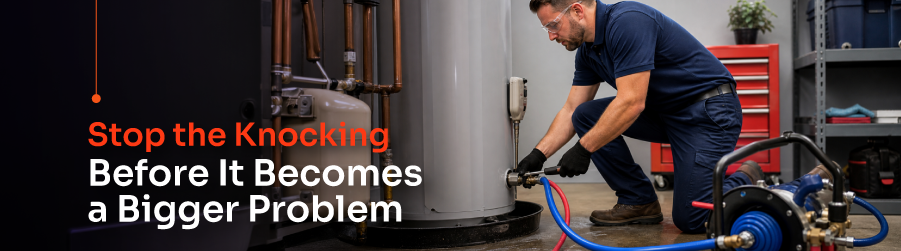
- Professional System Flushing
- The Process: We hook up professional-grade hoses and systematically drain your tank under pressure to break up and wash away the layer of loose sediment sitting at the bottom.
- Frequency Recommendation: Because of the exceptionally high mineral content in the High Desert, we recommend a professional flush every 6 to 12 months.
- Anode Rod Inspection: During a maintenance visit, our plumbers also inspect your sacrificial anode rod—a metal rod that intentionally attracts rust to protect the rest of the tank. If it’s completely eaten away, we replace it on the spot to extend your tank’s life.
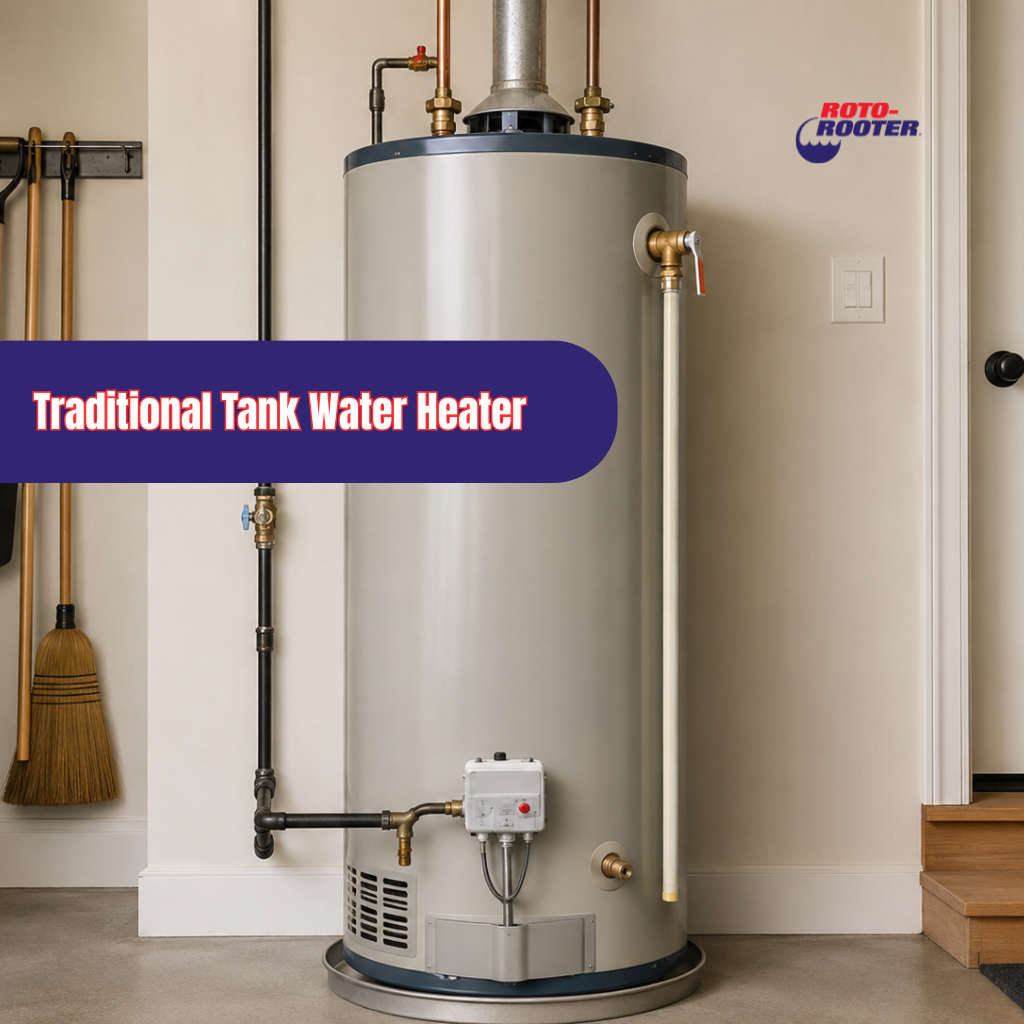
- Traditional Tank System Replacements
- When It’s Needed: If your water heater is over 10 to 15 years old, heavily rusted, or already leaking from the bottom, a flush won’t save it.
- Quality Selection: We handle the full installation of top-tier, heavy-duty traditional models from trusted manufacturers like Bradford White, Rheem, and A.O. Smith, ensuring your new unit features the latest sediment-reducing technology.
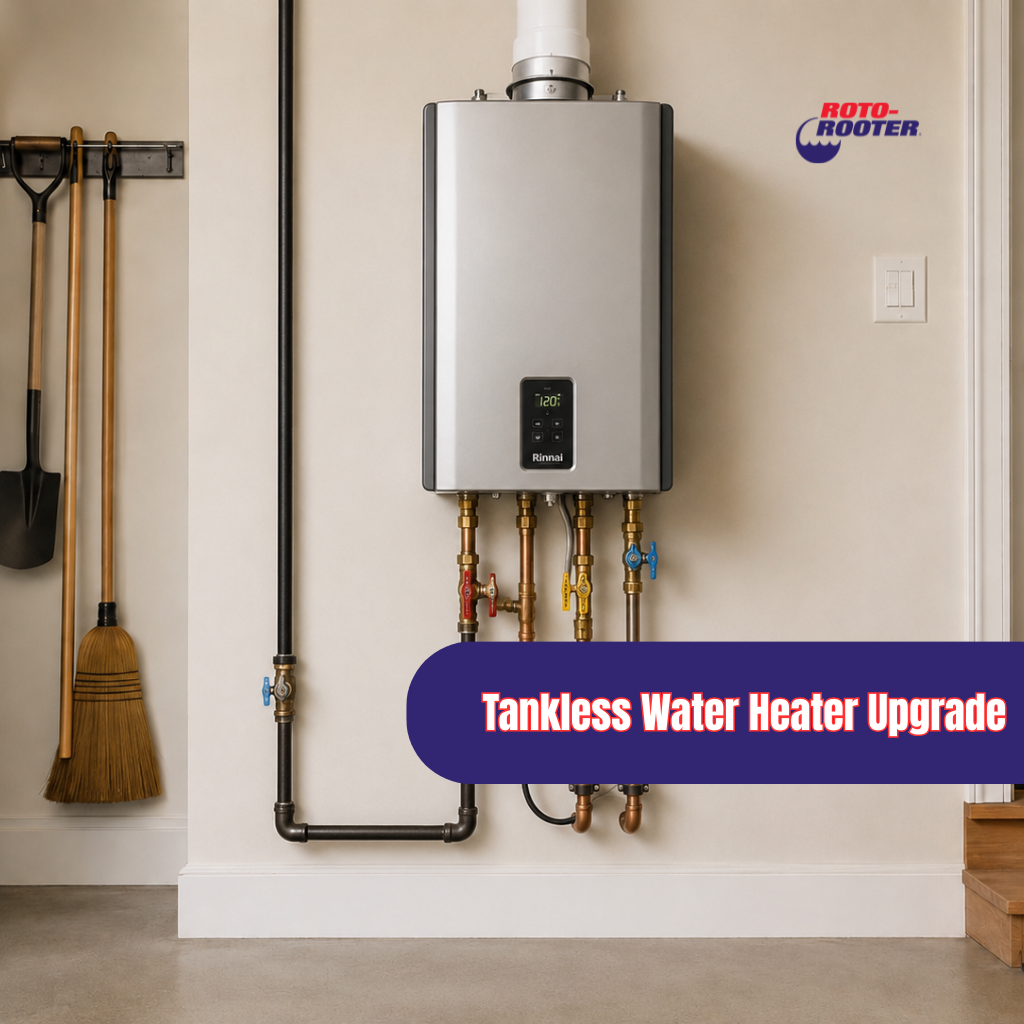
- High-Efficiency Tankless Upgrades
- Continuous Hot Water: Tankless water heaters heat water instantly on-demand using powerful copper heat exchangers rather than keeping 40 to 50 gallons of water hot all day long.
- No Sediment Tank Explosions: Because there is no massive storage tank where minerals can settle out and pool at the bottom, the knocking and popping sounds are completely eliminated.
- Space and Lifespan Advantages: Tankless units take up a fraction of the wall space and boast a lifespan of 15 to 20+ years—nearly double that of a conventional tank.
Tank vs. Tankless: Which is Right for You?
Feature | Traditional Tank Water Heater | Tankless Water Heater Upgrade |
Average Lifespan | 10 – 15 Years | 15 – 20+ Years |
Sediment Risk | High (Requires annual flushing) | Low (No tank storage for sediment to pool) |
Energy Efficiency | Standard (Constantly burns fuel to maintain heat) | Maximum (Only burns energy when a faucet turns on) |
Space Required | Massive floor footprint (Garage or closet) | Compact, wall-mounted design |
Hot Water Supply | Finite (Can run out during back-to-back showers) | Endless (Continuous flow on demand) |
Time for a Water Heater Tune-Up or Upgrade?
Don’t wait until you wake up to a freezing cold shower or a flooded garage. At Roto-Rooter, our certified experts are ready to flush, repair, or replace your hot water system seamlessly.
Frequently Asked Questions
Why is my water heater making a loud knocking or popping sound?
The sound is caused by trapped water boiling and creating mini steam explosions underneath a thick layer of hard water mineral sediment that has settled at the bottom of your tank over time.
Is a knocking water heater dangerous?
While it may not pose an immediate danger of exploding, it means your tank is overheating and straining. Over time, this causes severe metal fatigue, which leads to rust, structural cracks, and sudden, catastrophic tank leaks.
How often should I flush my water heater in the High Desert?
You should have your water heater flushed at least once a year. However, because our local High Desert groundwater contains significantly higher levels of calcium and magnesium, having it flushed every six months is highly recommended to prevent heavy mineral crusts from forming.
What is the average lifespan of a standard traditional water heater?
A traditional tank water heater typically lasts between 10 to 15 years. Neglecting routine maintenance or living in an area with unmanaged hard water can easily drop that lifespan down to less than 8 years.
What are the concrete benefits of upgrading to a tankless water heater?
Tankless systems heat water on demand rather than storing it, which saves space, reduces your monthly energy bills by up to 30%, eliminates sediment tank noises, and lasts up to two decades with proper care.