
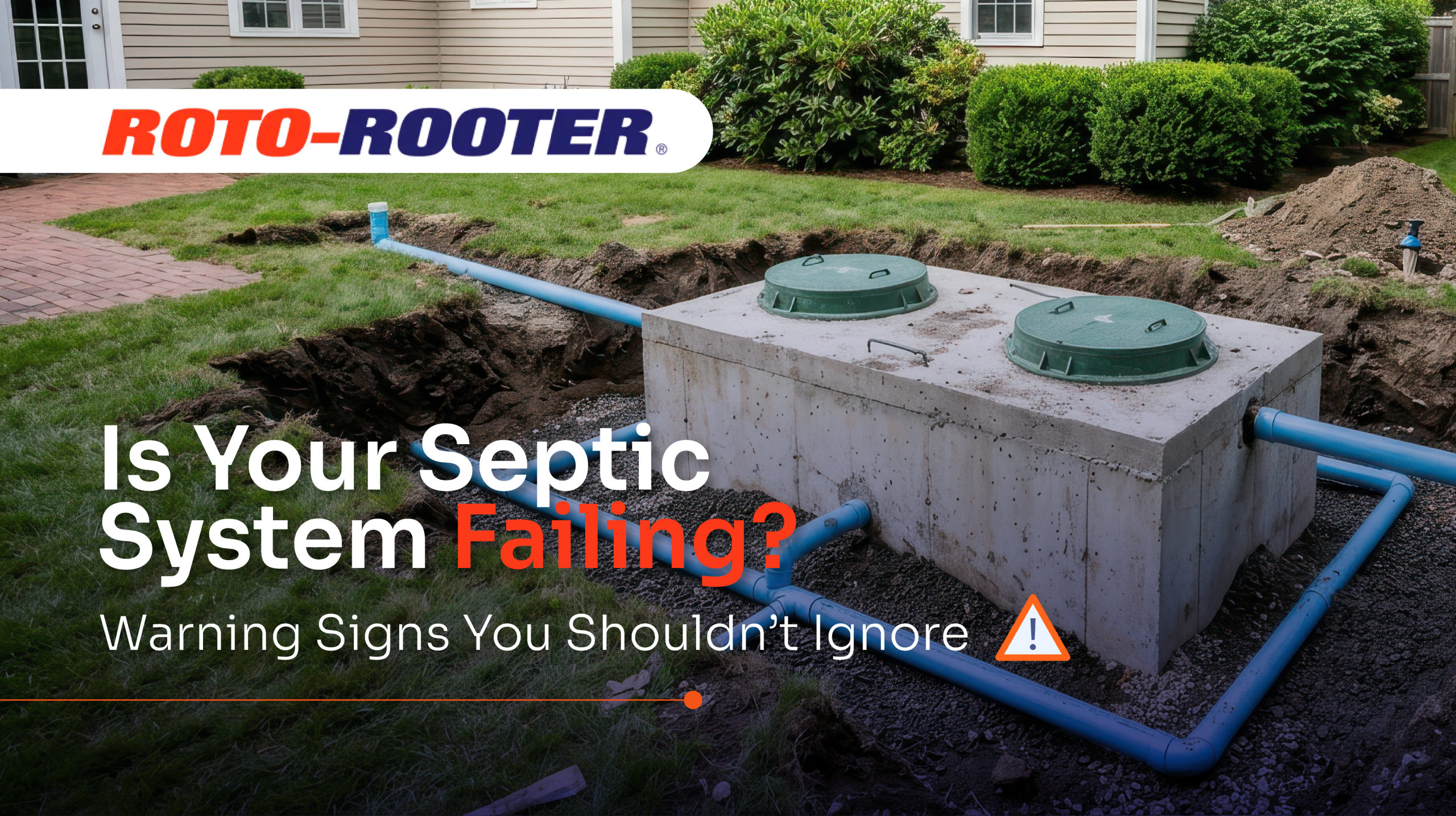
Troubleshooting Your Septic System: Warning Signs of a Failing Tank
Catching septic problems early can help protect your home, yard, and entire wastewater system from a much larger failure.
Your septic system does a lot of work behind the scenes every day. Wastewater from your sinks, showers, toilets, and appliances moves into the septic tank, where solids are separated from liquid wastewater before the liquid moves into the drainfield for further treatment.
Because most of the system is underground, problems are not always immediately visible. In many cases, homeowners first notice small changes around the house or yard—slower drains, unusual odors, soggy soil, or grass that suddenly looks much greener than everything around it.
These warning signs should not be ignored. A septic problem that begins with a minor backup or maintenance issue can eventually affect the tank, septic lines, or drainfield if the cause is not addressed.
At Roto-Rooter Plumbers and Septic Service, we help homeowners throughout Apple Valley and the surrounding High Desert identify septic problems and determine whether the system needs pumping, cleaning, repair, drainfield service, or replacement.
How Does a Septic System Work?
A typical septic system has two major components: the septic tank and the drainfield, sometimes called a leach field.
Wastewater from your home flows into the septic tank. Inside the tank, the system separates and processes wastewater before it continues into the drainfield.
Heavier solids settle to the bottom and form sludge.
Oils and grease float to the top and form a layer of scum.
Liquid wastewater remains between these two layers.
Liquid flows out of the tank and into the drainfield.
Surrounding soil helps filter and treat the wastewater.
When too much solid material accumulates or wastewater cannot move through the system properly, the septic tank or drainfield may begin showing signs of trouble. An overloaded drainfield can even cause wastewater to surface in the yard or back up into household plumbing.
7 Warning Signs Your Septic System May Be Failing
A septic system rarely goes from working perfectly to completely failing without giving some indication that something is wrong. Keep an eye out for these common warning signs.
Your Drains Are Moving Slower Than Usual
A slow sink by itself could simply mean you have a clogged drain. But when multiple drains throughout your home begin slowing down at the same time, the problem may be farther down the plumbing system.
You might notice:
- Toilets flushing more slowly
- Showers taking longer to drain
- Water sitting in sinks
- Multiple fixtures draining poorly at once
Slow drainage can occur when the septic tank is becoming too full or when there is a restriction affecting wastewater flow.
If several drains are suddenly giving you trouble, it is worth having the system inspected rather than repeatedly treating individual drains.
You Hear Gurgling From Toilets or Drains
Your plumbing should not regularly bubble or gurgle when water is draining.
Gurgling sounds may occur when wastewater or air is struggling to move through the drainage system. This can sometimes accompany a full septic tank, a blockage, or another flow problem.
Pay particular attention if it happens when you:
- Flush a toilet
- Run the washing machine
- Drain a bathtub
- Use several plumbing fixtures at once
Gurgling combined with slow drains is an especially good reason to schedule a professional inspection. The EPA lists both slow drains and gurgling plumbing among common signs of septic system malfunction.
There Is Standing Water or Soggy Ground Near the Septic Area
One of the more obvious outdoor warning signs is water pooling near your septic tank or drainfield.
You may notice:
- Unexplained puddles
- Muddy areas despite dry weather
- Soil that feels unusually soft
- Spongy ground around the drainfield
- Persistent dampness in one section of the yard
This can happen when the drainfield is unable to properly accept and disperse wastewater.
Standing water around a septic system should never be treated as just a landscaping issue. The EPA identifies damp or standing water over the septic tank or drainfield as a potential sign of system failure.
One Area of Your Lawn Is Suddenly Very Green
A beautiful green lawn normally sounds like a good thing.
But when the grass directly over your septic tank or drainfield becomes noticeably greener, thicker, or more lush than the rest of the property, your septic system may be providing the explanation.
Watch for grass that is:
- Brighter green than nearby areas
- Growing unusually quickly
- Thick or spongy
- Green even during especially dry conditions
Excess moisture or nutrients reaching the soil can create abnormal plant growth over the septic area.
The EPA specifically identifies bright green, spongy grass over a septic tank or drainfield—even during dry weather—as a warning sign homeowners should investigate.
You Notice Sewage or Rotten-Egg-Like Odors
Unpleasant smells around your plumbing or yard deserve attention.
Possible locations include:
- Around the septic tank
- Near the drainfield
- Around household drains
- Near toilets
- Outside near septic lines
Not every septic odor automatically means that the entire system is failing. Venting issues and other plumbing problems can also create odors.
However, persistent sewage smells combined with wet soil, drainage problems, or backups should be professionally investigated.
Wastewater Is Backing Up Into Your Home
A sewage backup is one warning sign you should never ignore.
Wastewater may begin appearing in:
- Toilets
- Bathtubs
- Showers
- Floor drains
- Sinks
A backup can indicate that wastewater no longer has a clear path through the septic system.
Problems Keep Returning Even After Pumping
Septic pumping is an important part of routine maintenance, but it cannot solve every problem.
If your tank was recently pumped and you continue experiencing:
- Frequent backups
- Slow drainage
- Standing water
- Leaks
- Persistent odors
- Recurring septic repairs
There may be a larger problem involving the tank, lines, components, or drainfield.
Older tanks can also develop structural problems such as cracks, leaks, corrosion, or deterioration. In some situations, repair is possible. In others, replacement provides the more dependable long-term solution.
Roto-Rooter High Desert evaluates septic systems to determine whether repair or replacement is appropriate rather than assuming every problem requires a completely new system.

Does Your Septic Tank Need Pumping, Cleaning, or Repair?
These services address different septic needs. The right solution depends on what is causing your system to show symptoms.
Septic Pumping
Pumping removes the liquid and solid waste that has accumulated inside the tank.
Roto-Rooter High Desert recommends septic pumping approximately every three to five years, depending on factors such as household usage and tank size.
Septic Cleaning
Cleaning goes beyond a standard pump-out by addressing residue and buildup on internal components and septic lines.
Professional cleaning may involve equipment designed to clean:
- Tank walls
- Baffles
- Filters
- Inlet and outlet lines
Roto-Rooter High Desert can also use sewer cameras and hydro-jetting equipment when appropriate to evaluate and clean septic system components.
Septic Repair
A repair may be appropriate when a professional identifies problems such as damaged components, leaks, line issues, or certain tank problems that can be corrected without replacing the complete system.
Septic Replacement
If the tank has severe structural damage, advanced deterioration, recurring failures, or other major problems, replacement may provide the best long-term solution.
The right service depends on why your septic system is showing symptoms, which is why an inspection is an important first step.
What Causes Septic Systems to Fail?
There is rarely one universal reason. Problems can develop because of:
- Too much solid waste accumulating in the tank
- Delayed septic pumping or maintenance
- Excessive water entering the system
- Drainfield problems
- Damaged septic lines or components
- Tree root intrusion
- Structural damage to the tank
- Improper system design or installation
- Driving or placing heavy equipment over a drainfield
When maintenance is neglected, solids can eventually move from the tank toward the drainfield and contribute to clogging. Routine inspections and pumping can help reduce the likelihood of this type of failure.
Protecting Your Septic System Before Problems Start
Septic maintenance is much easier to manage before your yard becomes soggy or wastewater begins backing up indoors.
A few good habits can make a major difference:
The EPA recommends protecting drainfields from vehicles, tree roots, and excess surface water because these conditions can interfere with proper treatment and damage septic components.
Don’t Wait for a Complete Septic Failure
Your septic system may be underground, but it usually gives you clues when something is wrong. Slow drains, gurgling plumbing, unpleasant odors, unusually green grass, wet areas over the drainfield, and sewage backups are all signs worth investigating.
Catching the cause early may allow you to address maintenance or repair needs before the situation becomes significantly more disruptive.
Roto-Rooter Plumbers and Septic Service provides septic pumping, cleaning, inspections, drain and leach field services, repairs, replacements, and installations throughout Apple Valley and surrounding High Desert communities. The team is also available 24/7/365 when septic problems cannot wait.
Frequently Asked Questions
How do I know if my septic tank is full or failing?
Slow drains, gurgling plumbing, unpleasant odors, standing water, soggy ground, or sewage backups can all indicate that your septic system needs attention. A professional inspection can determine whether the problem is simply a full tank or something affecting another part of the system.
Why is the grass greener over my septic drainfield?
Unusually green or fast-growing grass can indicate excess moisture or nutrients reaching the soil above the septic system. When the difference is noticeable—especially during dry weather—it is a good reason to have the system inspected.
How often should a septic tank be pumped?
A common guideline is approximately every three to five years, although the right schedule depends on factors such as tank size, household size, and water usage. Roto-Rooter High Desert recommends having your individual system evaluated to determine the appropriate maintenance schedule.
Can a failing septic system be repaired?
Sometimes. The right solution depends on what has failed and how extensive the damage is. Certain leaks, damaged components, and line problems may be repairable, while severe structural damage or recurring failures can make replacement a better long-term option.
Should I call someone if there is standing water over my septic system?
Yes. Unexplained wet, muddy, or spongy soil around the septic tank or drainfield can indicate that wastewater is not being properly absorbed. It should be professionally evaluated before the condition becomes worse.