
A leak under your sink may look minor, but it can cause cabinet damage, mold growth, and higher water bills if ignored. Many homeowners start searching for how to repair a leak under the sink when they notice moisture, odors, or pooling water below the basin. The issue matters because under-sink leaks often worsen quietly and damage surrounding materials. According to the U.S. Environmental Protection Agency, household leaks can waste nearly 1 trillion gallons of water nationwide each year, and many leaks happen at plumbing connections. This guide explains how professionals approach under-sink leaks, why they happen, how to prevent them, and when expert help is needed.
How to Repair a Leak Under the Sink
Knowing how to repair a leak under the sink starts with identifying the leak type, checking common failure points, and taking steps to limit water damage. Early actions help control moisture, while inspection reveals whether the issue is a loose fitting, a worn seal, or a damaged part.
1. Identify the Type of Leak
Some leaks drip constantly, while others appear only during use. Noting when the leak happens helps narrow down the source.
2. Inspect Common Leak Points
Most under-sink leaks come from supply lines, drain connections, or the sink strainer. Visual checks often reveal corrosion or loose fittings.
3. Temporary Actions to Minimize Damage
Short-term steps help protect cabinets and flooring until repairs are made.
Shut Off the Water Supply
Turning off the shut-off valves stops active leaks. This prevents further water damage.
Place a Bucket Under the Leak
A bucket catches dripping water. This reduces cabinet swelling and mold risk.
Dry the Area to Locate the Leak Source
Dry surfaces make new leaks visible. This helps pinpoint the exact failure point.
Professional Methods for Fixing Under-Sink Leaks
Professional repairs focus on long-term reliability rather than short fixes. Plumbers replace worn parts, reseal connections, and correct installation issues that cause repeat leaks. These methods address both the leak and its cause.
Replacing P-Traps, Washers, or Slip Nuts
Cracked traps and worn washers cause frequent leaks. Replacement restores a tight seal.
Installing New Supply Lines or Shut-Off Valves
Old supply lines weaken over time. New lines reduce burst and drip risks.
Resealing the Drain Assembly With Proper Materials
Failed seals allow water to escape beneath the sink. Proper sealing prevents recurring leaks.
Correcting Misaligned or Poorly Installed Plumbing
Misalignment stresses joints and fittings. Proper alignment ensures long-term stability.
Improper installation often causes hidden leaks. Click here to learn common drain installation mistakes and why professional corrections matter.
Why the Sink Is Leaking From the Bottom
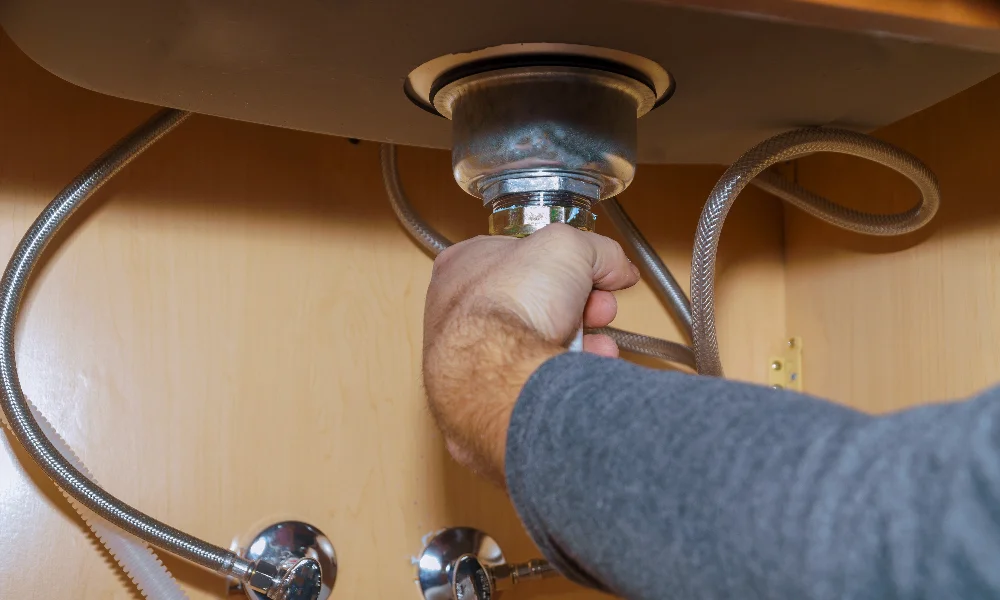
Many homeowners ask why is my sink leaking from the bottom after noticing water inside the cabinet. Leaks usually come from worn components, failed seals, or corrosion around drain parts. These issues often develop slowly and worsen with use.
Worn or Damaged Sink Strainer Assembly
The strainer connects the sink to the drain. Wear allows water to escape underneath.
Failed Plumber’s Putty or Gasket
Putty and gaskets dry out over time. When they fail, leaks form during use.
Corrosion Around the Drain Opening
Metal drains corrode with age. Corrosion weakens seals and causes slow leaks.
Loose Strainer Locknut or Seal
Vibration loosens fittings over time. Even small gaps can leak significantly.
How to Prevent Future Sink Leaks
Preventing leaks focuses on regular inspection, proper handling of fittings, and timely replacement of aging parts. These steps reduce stress on plumbing connections and extend system life.
Inspect Under-Sink Plumbing Regularly
Routine checks catch moisture early. Early repairs prevent cabinet damage.
Avoid Overtightening Slip Nuts and Fittings
Overtightening cracks fittings and washers. Proper tension maintains a reliable seal.
Replace Old Supply Lines Every 5–10 Years
Aging lines weaken internally. Replacement reduces sudden leak risk.
Keep the Area Free From Stored Items Pressing on Pipes
Stored items can shift pipes. Pressure causes misalignment and leaks.
Knowing how to stop a sink from leaking often comes down to preventing stress on connections and addressing wear early. Ignoring minor drips usually leads to larger failures.
FAQs
What Is the Most Common Under Sink Leak?
The most common issue is a loose or worn drain connection. Supply line leaks are also frequent.
How Do You Figure Out Where a Leak Is Coming from Under The Sink?
Dry the area and run water slowly. Watch for moisture forming at fittings or seals.
Is a Leak Under the Sink an Emergency?
Active leaks need prompt attention. Slow leaks still require repair to avoid damage.
Roto-Rooter Plumbers and Septic Service Is Your Professional Sink Repair Service in Apple Valley, CA
This article explained how to repair a leak under the sink, why under-sink leaks occur, professional repair methods, and prevention tips. Even small leaks can result in severe damage if ignored. If you notice moisture, dripping, or cabinet damage, contact Roto-Rooter Plumbers and Septic Service for professional sink repair in Apple Valley, CA. Our licensed plumbers provide accurate diagnoses and reliable repairs that protect your home as well as your plumbing system.