Roto-Rooter Plumbers & Septic Service
Water Heater Replacement & Installation in the High Desert
No hot water, rusty water, or a puddle at the base? Here's how to tell whether your water heater needs a repair or a replacement — and how to pick the right next unit for your home.
Call us at (760) 245-2947& Insured
24/7/365
Guarantee
Catch It Early
Signs Your Water Heater Is Going Out
A water heater doesn't usually fail without warning. It tells you first — if you know what to look for.
Puddles at the base
Water pooling under the unit usually means the tank itself has corroded or cracked — and that can't be patched.
Rusty or discolored hot water
If only the hot side runs brown, the inside of the steel tank is actively corroding. Fill a white bowl to check.
Popping, rumbling, or banging
Hardened sediment on the bottom forces the burner to overheat the tank. It's a sign the system is straining. Learn more about why water heaters pop.
Running out of hot water fast
Heating elements or thermostats are failing, or sediment has reduced the usable tank volume.
Frequent breakdowns
If you're calling for different parts in a short window, the whole system is winding down.
It's past 10 years old
Standard tanks last 8–12 years. Past 10, efficiency drops and the risk of a catastrophic leak climbs.
The Big Decision
Repair It or Replace It?
The rule of thumb: if the repair costs more than half the price of a new unit, or the heater is past 10 years, replacement is usually the smarter investment. Here's how the two paths break down.
When Repair Makes Sense
- The unit is under 8 years old and still under warranty
- The problem is a single component: a thermostat, element, anode rod, or thermocouple
- Lukewarm water that's fixed by resetting a breaker, relighting a pilot, or flushing sediment
- Strange noises that go away after a routine tank flush
When Replacement Is the Call
- The tank itself is leaking — a corroded tank can't be repaired
- Rusty hot water persists even after flushing and replacing the anode rod
- Multiple parts failing in a short timeframe
- The unit is over 10 years old — efficiency has dropped and failure risk is high
Not sure which side yours is on? We'll inspect the unit, test the components, and give you an honest assessment — if a $150 part fix buys you five more years, we'll tell you that instead of pushing a new install.
Get a Straight Answer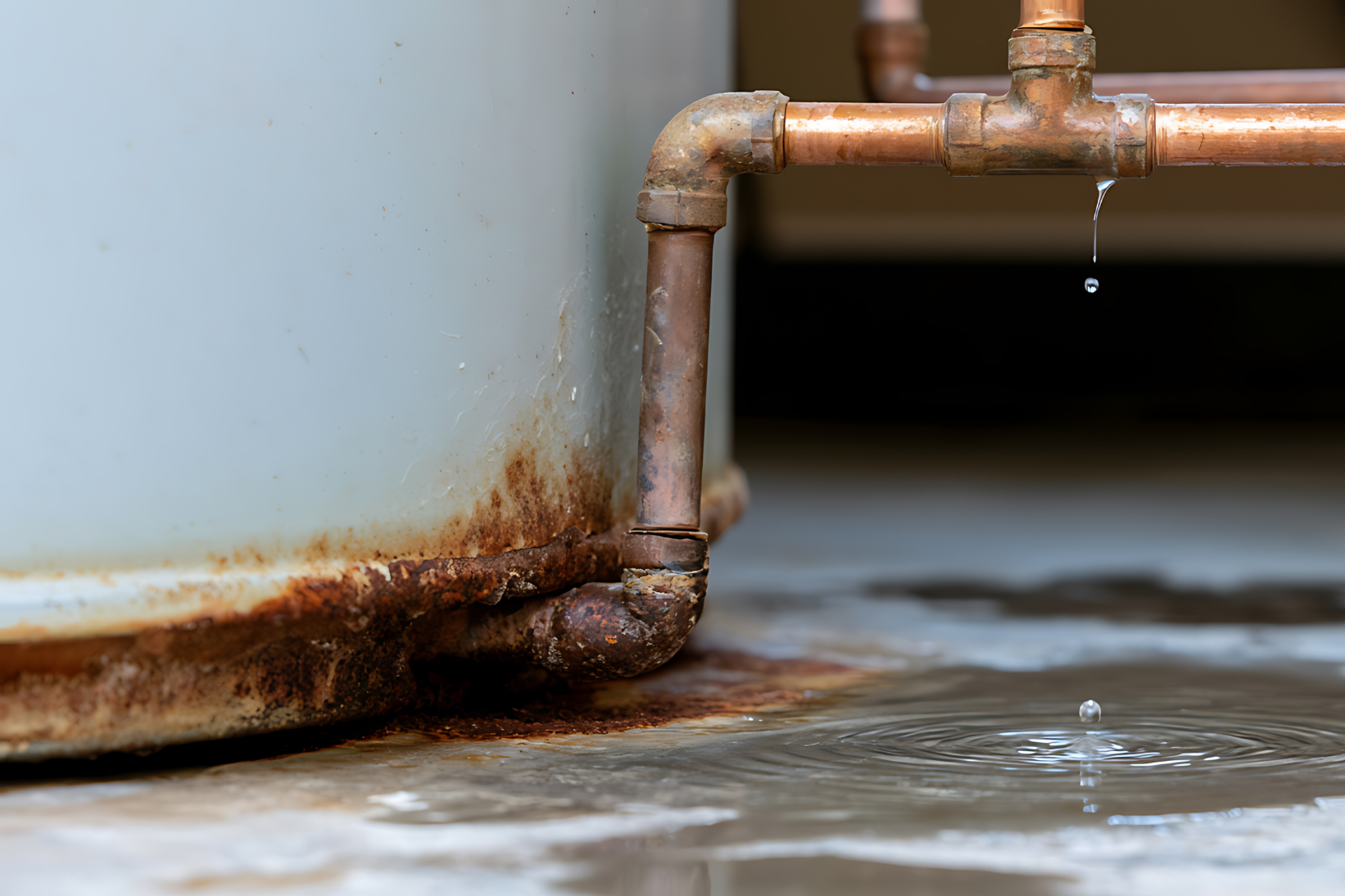

Which One's Right?
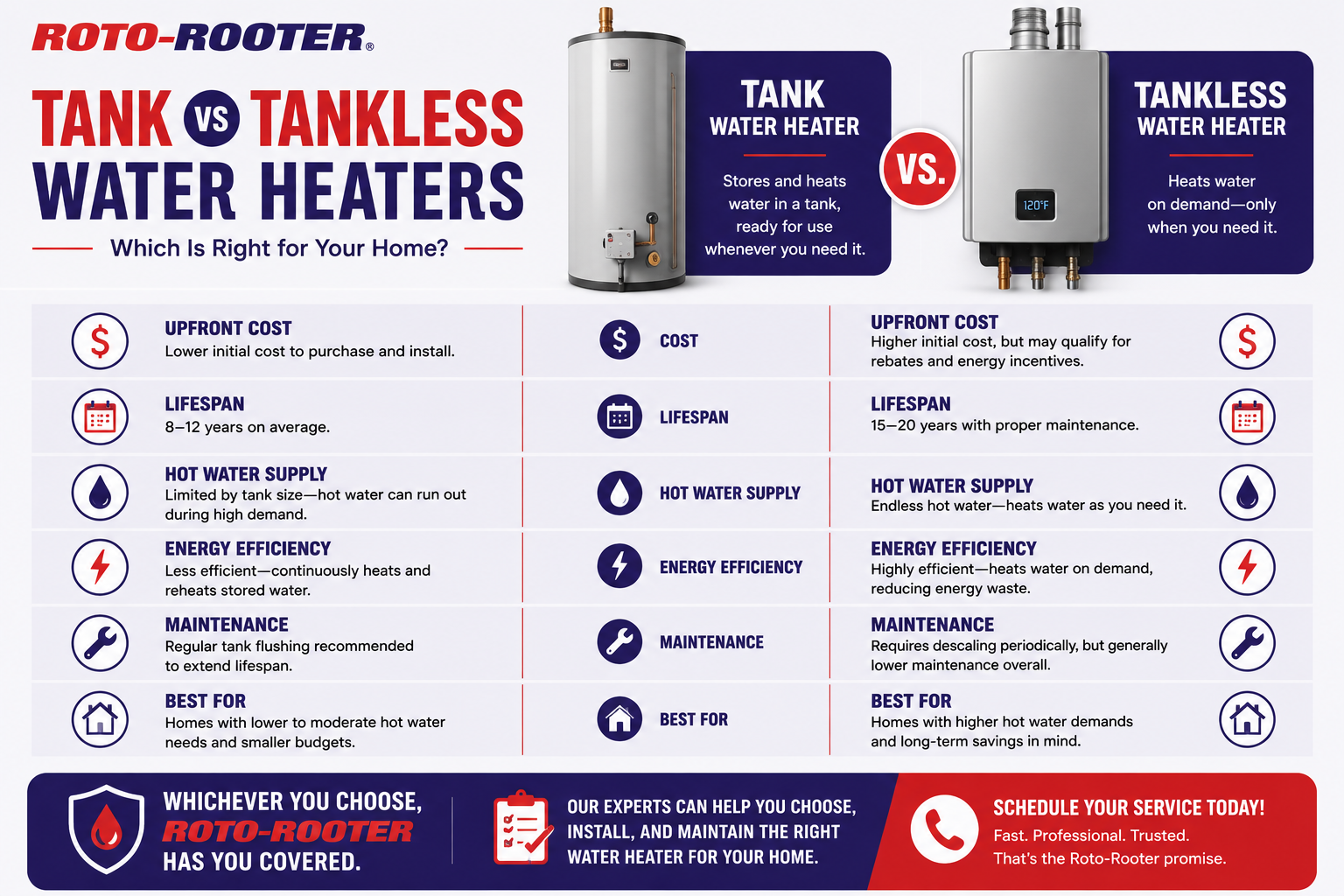
Tank vs. Tankless Water Heaters
One stores and reheats water around the clock. The other heats it on demand. Both have a place — here's the full comparison, side by side.
By the Numbers
Year lifespan for a standard tank water heater — less in hard-water areas without a softener.
Year lifespan for a tankless unit with proper annual descaling maintenance.
Energy savings a tankless heater can deliver by eliminating standby heat loss.
Getting It Right
What Size Water Heater Do You Need?
An undersized heater runs out of hot water. An oversized one wastes energy heating water you'll never use. Here's the quick guide by household size.
| Household Size | Tank (gallons) | Tankless (GPM) |
|---|---|---|
| 1–2 people | 30–40 gal | ~3.5 GPM |
| 2–3 people | 40–50 gal | ~5 GPM |
| 3–4 people | 50–60 gal | ~7 GPM |
| 5+ people | 60–80 gal | 8–10 GPM |
Ask About Current Specials & Financing
We run seasonal discounts on water heater installs and offer flexible financing on replacements and upgrades. Reach out and we'll walk you through what's available.
What Drives the Cost
What Affects Water Heater Pricing
A basic swap and a full tankless conversion are very different scopes. The main factors:
System type. A standard tank replacement is the most straightforward; converting to tankless may need gas line, venting, or electrical upgrades.
Fuel source. Gas units require proper venting; electric units may need panel upgrades. Hybrid heat-pump models sit between the two.
Capacity. Larger tanks and higher-GPM tankless units cost more upfront but prevent the "running out" problem.
Code upgrades. Local code may require an expansion tank, seismic straps, or updated connections on a new install.
Want a real number for your home? We assess the existing setup and quote from facts — with financing available on bigger jobs. Contact us for pricing, current specials, and financing options.
Get Your Free EstimateQuestions, Answered
Water Heater FAQ
When should I replace my water heater instead of repairing it?
Replace if the tank itself is leaking, the unit is over 10 years old, rusty water persists after flushing and replacing the anode rod, or repair costs exceed about half the price of a new unit. Otherwise, single-component fixes are usually worth it.
How long does a water heater last?
A standard tank lasts 8 to 12 years; a tankless unit can last 15 to 20 years with annual maintenance. Hard water shortens both, which is why a softener makes a real difference in the High Desert.
Tank or tankless — which is better?
Tanks are cheaper upfront and simpler to install. Tankless provides endless hot water and saves 25 to 35 percent on energy, but costs more and may need gas or electrical upgrades. Choose a tank if you're on a tight budget or selling soon; choose tankless for long-term savings and high hot-water demand.
What size water heater do I need?
For tanks: 30 to 40 gallons for 1 to 2 people, 50 to 60 for 3 to 4, and 60 to 80 for 5 or more. For tankless: add up the GPM of fixtures you'll run at the same time — most homes need 5 to 8 GPM.
Why do plumbers hesitate to recommend tankless?
Retrofitting often requires upsizing gas lines, adding specialized venting, or upgrading the electrical panel. In areas with very hard water, a softener is practically mandatory to prevent rapid scale damage. When a home can't support those upgrades affordably, a high-efficiency tank is the more practical choice.
Does High Desert hard water affect my water heater?
Yes, significantly. Mineral-rich water accelerates sediment buildup in tanks and can clog tankless heat exchangers in under two years without a softener. Pairing any new heater with a water softener is one of the best ways to protect it. See our hard water guide for the full picture.
Explore More
Services, Guides & More
Hot Water Shouldn't Be a Guessing Game
Whether it's a quick fix or a full replacement, our High Desert team diagnoses it honestly and installs it right — available 24/7/365.
Get In Touch
Schedule a Water Heater Assessment
Tell us what your heater is doing and we'll send a tech to assess it. Proudly serving Apple Valley, Victorville, Hesperia, Phelan, and the entire High Desert.


