Roto-Rooter Plumbers & Septic Service
Gas Line Safety & Leak Detection in the High Desert
Natural gas powers your water heater, furnace, stove, and dryer — safely, until something fails. Here's how to recognize a leak, what to do the moment you suspect one, and the professional services that keep your home protected.
Call us at (760) 245-2947& Insured
24/7/365
Guarantee
If You Smell Gas Right Now
Stop, Leave, and Call
What to Do Immediately
Stop. Don't flip switches, light anything, or use your phone inside.
Leave. Get everyone — including pets — out of the house on foot. Leave doors open as you go.
Move away. Get at least 300 feet from the home, upwind if possible.
Call. Dial 911 or your gas company from outside. Do not re-enter until cleared.
Never sleep in a home that smells like gas. Gas accumulates while you can't react — a single automated appliance cycling on can spark an explosion. Evacuate and sleep elsewhere until professionals clear the home.
Detect It Early
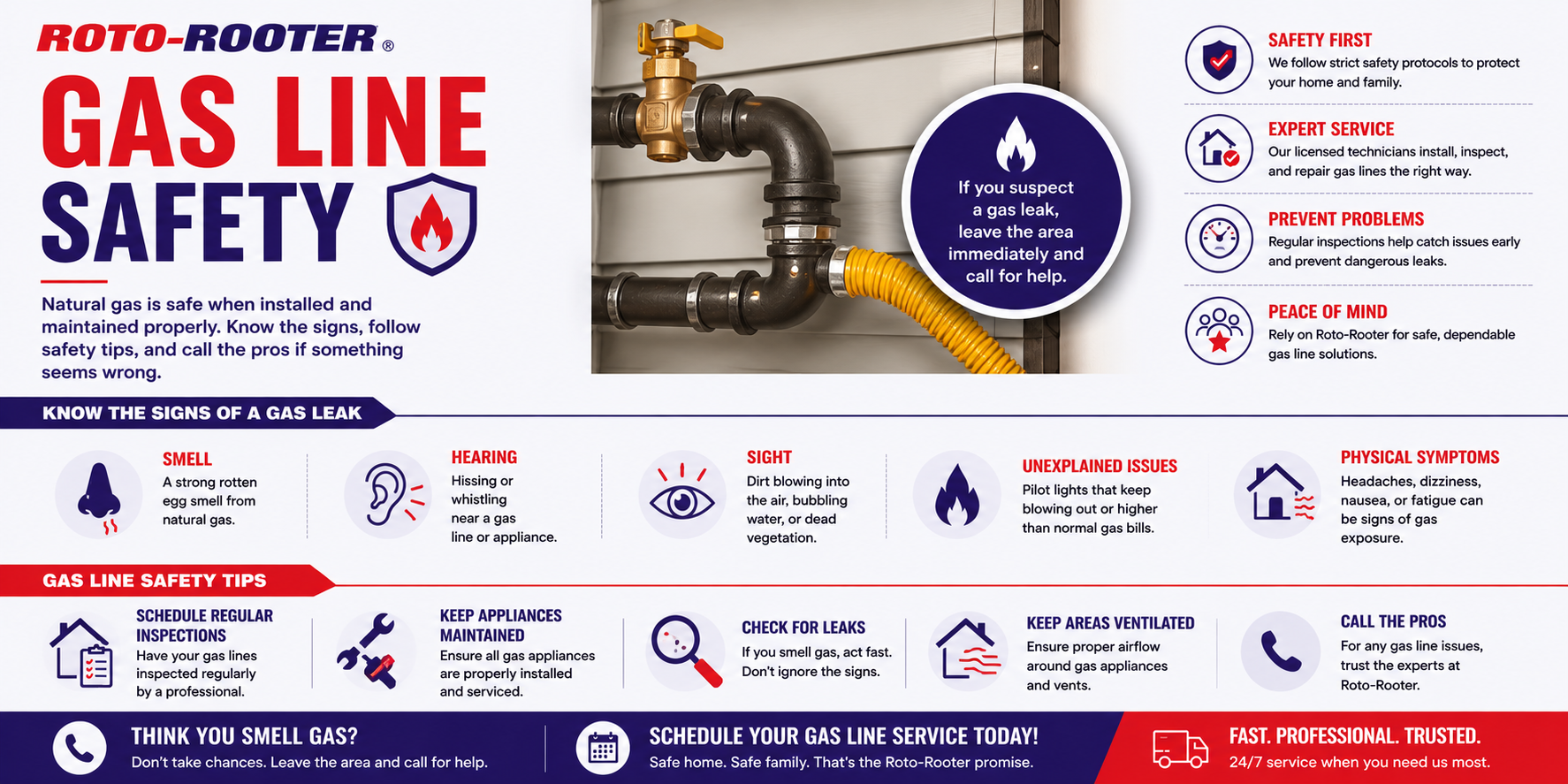
Signs of a Gas Leak in Your Home
Natural gas is colorless and odorless on its own. Utility companies add mercaptan — a chemical with a strong rotten-egg smell — so you can detect it. But smell isn't the only clue.
Rotten-egg or sulfur smell
The most recognizable sign. Any persistent gas odor indoors is an emergency.
Hissing or whistling
An unusual sound near a gas line, valve, or appliance connection means gas is escaping under pressure.
Dead plants or vegetation
Unexplained patches of dying grass, shrubs, or houseplants near a gas line path.
Physical symptoms
Headaches, dizziness, nausea, or unexplained fatigue — especially if they ease when you leave the house. Learn more about gas detection in your home.
Pilot lights that won't stay lit
A pilot that keeps blowing out or an unexplained spike in your gas bill can signal a supply-side leak.
Bubbling water or blowing dirt
Gas escaping underground pushes dirt into the air or bubbles through standing water near the line.
Check Your Stove
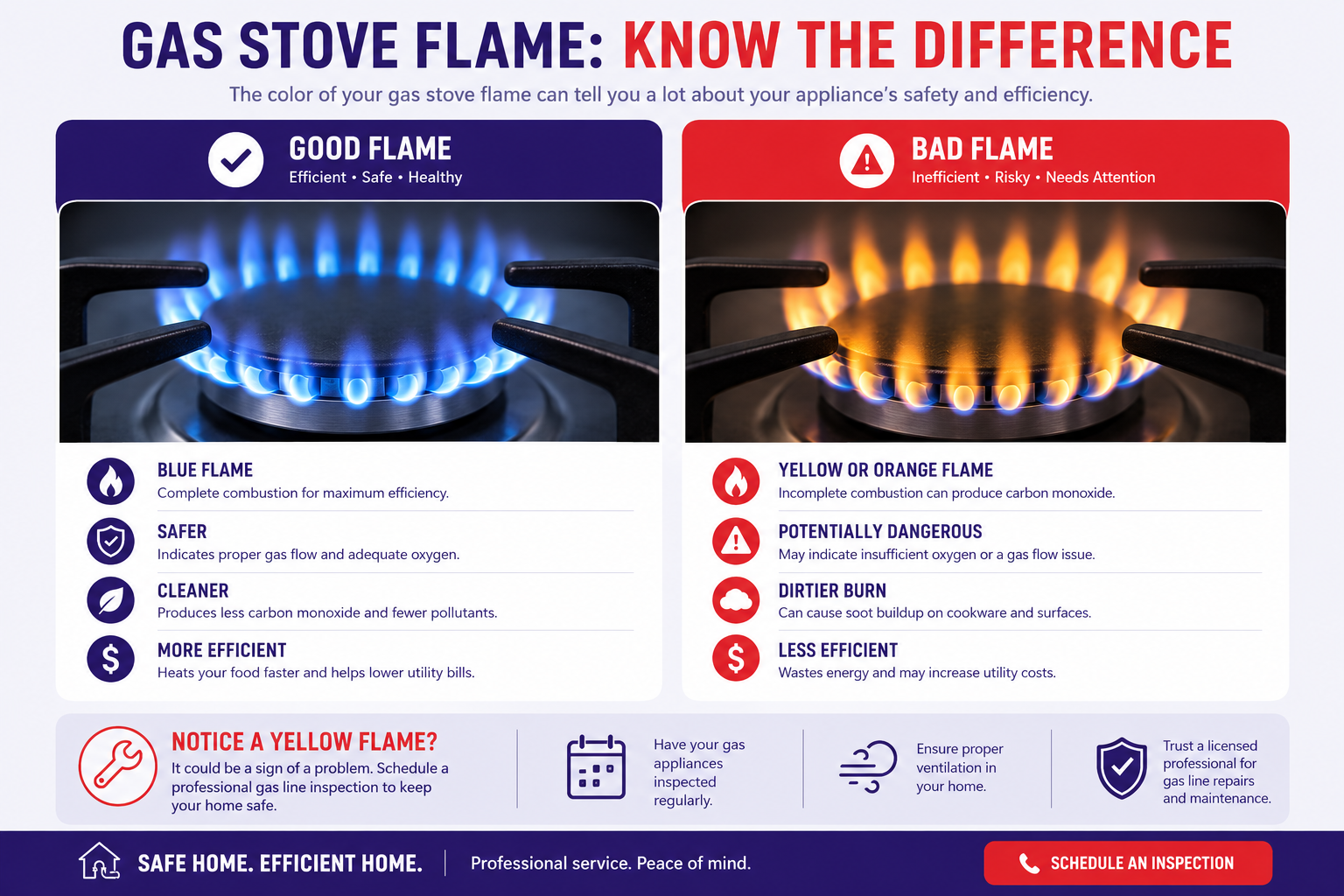
Blue Flame vs. Yellow Flame
The color of your gas stove flame tells you a lot about safety and efficiency. A crisp blue flame is healthy; yellow or orange means incomplete combustion and possible carbon monoxide production.

Your Complete Guide
Gas Line Safety
From recognizing a leak to scheduling regular inspections, here's the full picture of keeping your home's gas system safe and code-compliant.
Proving It's Sealed
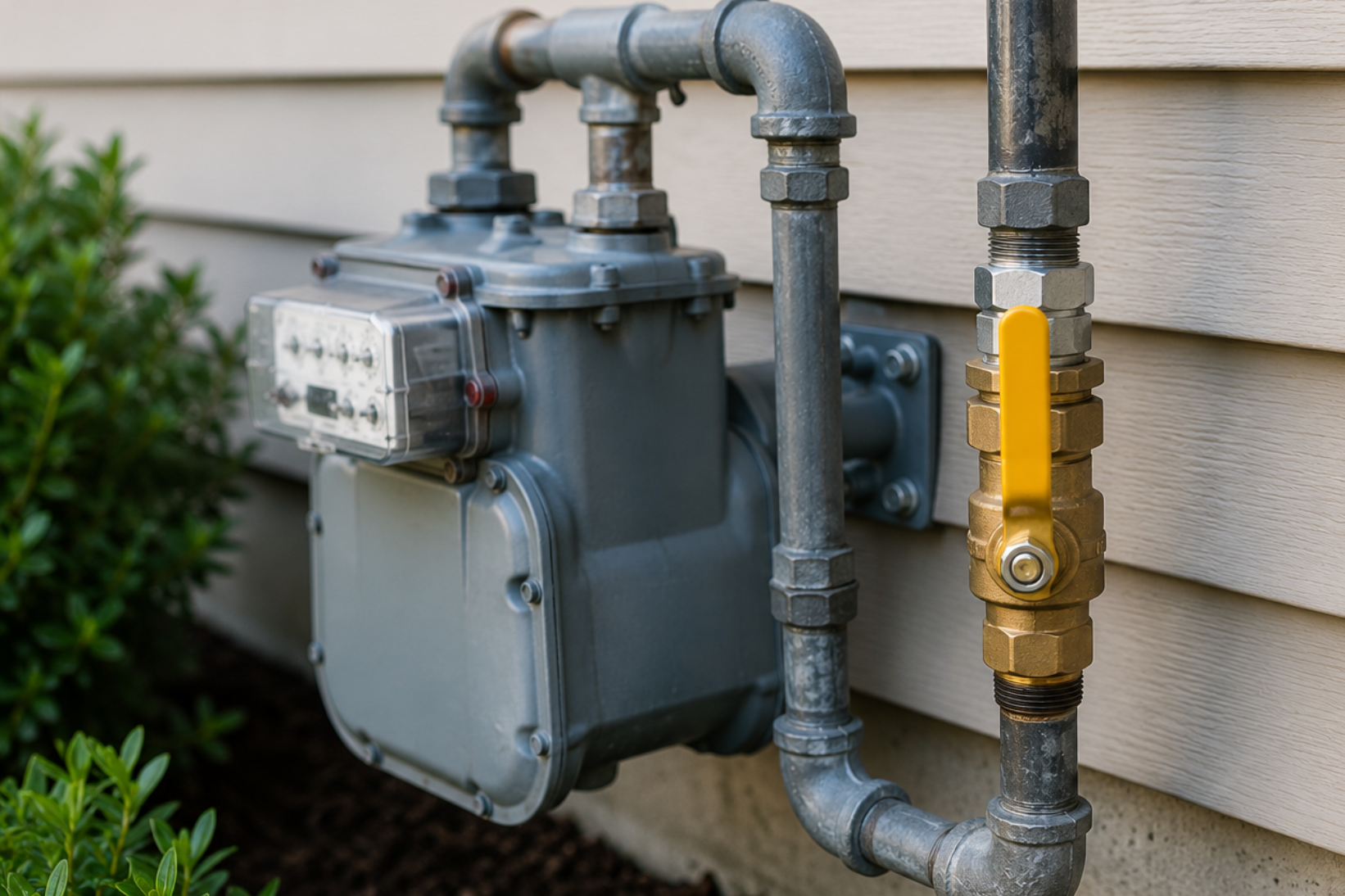
Gas Line Pressure Testing
A pressure test is the definitive way to confirm your gas system has no leaks. It's required for new installations, after repairs, and often for permit sign-off or utility reconnection.
How it works: the technician shuts off the gas supply, isolates all appliances, pressurizes the line with air or nitrogen (typically 3–10 PSI), and monitors the gauge for 15–30 minutes. A steady needle means the system is sealed; any drop means there's a leak to find and fix before gas is turned back on.
Small pressure fluctuations from temperature changes are normal — technicians account for that when reading results.
Professional Gas Work
What a Gas-Certified Plumber Can Do
Gas line work requires specialized licensing beyond a standard plumbing credential. Our technicians hold the certifications to safely handle every scope.
Leak Detection & Repair
Electronic sniffers, soap-bubble testing, and pressure gauges to pinpoint the exact leak point — then repair or replace the compromised fitting, joint, or line section.
New Line Installation
Run new gas lines for stoves, dryers, water heaters, furnaces, outdoor fire pits, and BBQ hookups — properly sized, permitted, and pressure-tested.
Line Extensions & Upgrades
Extend existing piping for a kitchen remodel, a tankless water heater conversion, or adding a gas appliance — with full code compliance and inspection.
Read more about our gas leak detection & repair service and gas line installation & repair. Concerned about furnace-related leaks? See our guide on furnace gas leaks.
Ask About Current Specials & Financing
We offer flexible financing on gas line installations and larger repairs. Reach out and we'll walk you through what's available.
What Drives the Cost
What Affects Gas Line Pricing
A small appliance hookup and a full-property gas repipe are very different jobs. The main factors:
Scope. A single leak repair costs less than running a new line across the property or upgrading for a tankless water heater.
Pipe material & length. Black iron and CSST (corrugated stainless steel) have different cost profiles. Longer runs take more material and labor.
Permits & testing. New installs and major repairs require local permits and a pressure test for sign-off.
Access. Lines buried underground or routed through finished walls add complexity compared to exposed runs.
Want a real number? We assess the system, explain the scope, and quote from facts — with financing available on larger installs. Contact us for pricing, current specials, and options.
Get Your Free EstimateQuestions, Answered
Gas Line FAQ
What should I do if I smell gas in my house?
Leave immediately — don't flip switches, light anything, or use your phone inside. Once safely outside (at least 300 feet away), call 911 or your gas company. Do not re-enter until professionals have cleared the home.
What are the signs of a gas leak?
A strong rotten-egg or sulfur smell, hissing or whistling near gas lines or appliances, dead vegetation near a line path, bubbling water or blowing dirt outside, unexplained pilot light failures, and physical symptoms like headaches, dizziness, or nausea.
Can a plumber install a gas line?
Yes, as long as they hold the proper gas-fitter certification or gas-piping license. Gas work requires specialized training beyond a standard plumbing credential to safely handle natural gas and prevent leaks or explosions.
What happens during a gas line pressure test?
The technician shuts off the gas, isolates all appliances, pressurizes the line with air or nitrogen (usually 3 to 10 PSI), and monitors the gauge for 15 to 30 minutes. A steady needle means the system is sealed; any drop indicates a leak that must be found and fixed.
Is a faint smell of gas normal?
No. Any persistent gas odor indoors should be treated as an emergency. A brief whiff when lighting an older burner can happen, but a smell that lingers means gas is escaping and the system needs immediate professional inspection.
Is it safe to sleep in a house that smells like gas?
Absolutely not. Gas accumulates while you sleep and you can't monitor it or react to oxygen displacement. A single appliance cycling on can spark an explosion. Turn off the gas if you safely can, evacuate, and sleep elsewhere until the home is cleared by a professional.
Explore More
Services, Guides & More
Gas Safety Is Never a DIY Job
Whether it's a suspected leak, a new appliance hookup, or a full pressure test, our licensed High Desert team handles it safely — available 24/7/365.
Get In Touch
Schedule Gas Line Service
Tell us what you need — a leak check, a new line, or a pressure test — and we'll send the right technician. Proudly serving Apple Valley, Victorville, Hesperia, Phelan, and the entire High Desert.


